
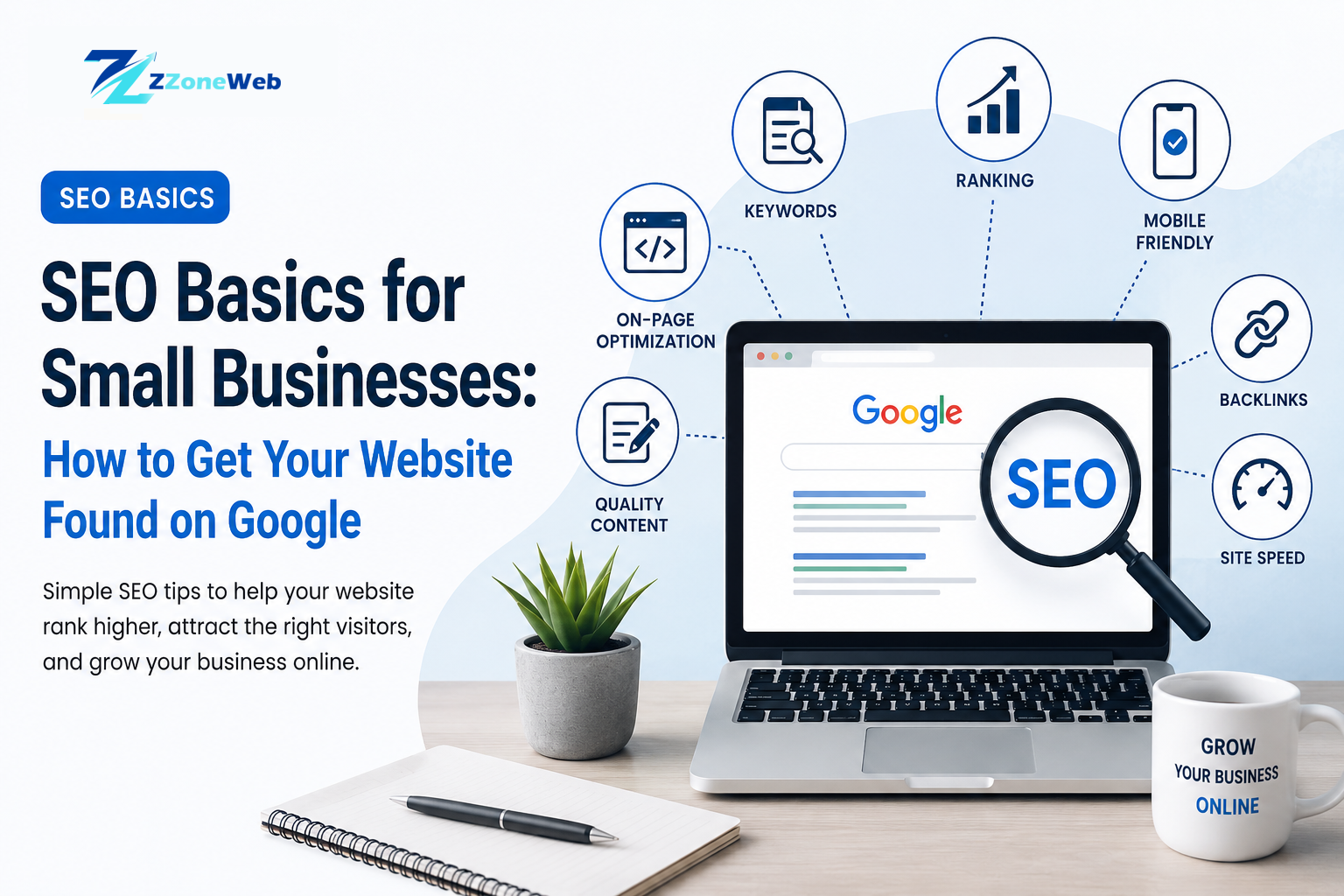
Many business owners believe that once their website is live, customers will automatically find it on Google.
Unfortunately, that is not how it works.
A website can lookprofessional, have great services, and still receive very little traffic if search engines cannot understand what the business offers.
This is where SEO comes in.
Search Engine Optimization (SEO) helps search engines understand your website and improves your chances of appearing when potential customers search for your services.
For example, if someone searches:
• “WordPress website developer”
• “Shopify store development”
• “SEO services for small businesses”
your goal is to have your website appear in front of those people.
SEO is not about quick tricks or overnight results. It is about building a website that provides value to visitors and gives search engines the right information.
Let’s look at some basic SEO practices every small business should know.
Understand What Your Customers Are Searching For
Before optimizing a website, you need to understand what your potential customers are actually searching for.
Many businesses make the mistake of focusing only on what they want to say instead of thinking about what their customers need.
For example, a business may describe its service as:
“Digital transformation solutions”
but customers may search for:
“Website design company for small business”
The words your customers use matter.
Good SEO starts with understanding:
• What problems your customers have
• What services they are looking for
• What questions they ask before making a decision
Your website content should connect with those searches.
Optimize Your Website Pages
Every page on your website should have a clear purpose.
Search engines need to understand what each page is about.
Important areas to optimize include:
• Page title
• Meta description
• Headings
• Website content
• Image descriptions
• Internal links
For example, your service page should clearly explain:
• What service you provide
• Who it is for
• How it helps customers
A page that only contains a few lines of general information gives search engines very little context.
Create Useful Content That Answers Questions
One of the best ways to improve SEO is by creating helpful content.
Many customers search Google before contacting a business.
They may search:
• How much does a website cost?
• What makes a good business website?
• How can I improve my website speed?
• Do I need SEO for my business?
A blog allows you to answer these questions and attract people who are already interested in your services.
The goal is not just to write articles for search engines.
The goal is to create content that helps real people
Make Sure Your Website Works Well on Mobile
Mobile experience is now an important part of website quality.
If visitors come to your website from their phone and struggle to use it, they may leave quickly.
Common mobile problems include:
• Text that is difficult to read
• Buttons that are too small
• Images that do not display properly
• Slow loading pages
A mobile-friendly website creates a better experience for visitors and supports your SEO efforts.
Improve Your Website Speed
Website speed affects both users and search engines.
Think about your own experience. If a website takes too long to open, you probably do not wait around — you simply move to another website.
Slow websites often have problems such as:
• Large image files
• Too many unnecessary plugins
• Poor optimization
• Heavy website elements
Improving speed does not mean removing everything from your website. It means making smart improvements so visitors can access your content quickly.
Build Trust Through Quality Links
SEO is not only about what happens on your own website.
Search engines also look at signals that show whether your website is trustworthy.
One example is backlinks — when other websites mention and link to your website.
For example:
• A business directory listing
• A partner website mentioning your company
• Industry-related websites linking to your content
Quality matters more than quantity. A few relevant links are more valuable than many low-quality ones.
Keep Your Website Updated
SEO is not something you set up once and forget.
Search engines prefer websites that continue to provide useful and updated information.
Regular improvements can include:
• Publishing new blog posts
• Updating old content
• Adding new services
• Improving existing pages
A website that stays active has more opportunities to appear in search results.
SEO Takes Time, But It Builds Long-Term Value
SEO is not a shortcut to instantly get hundreds of visitors.
A successful SEO strategy requires patience, consistent improvements, and a focus on providing value.
The businesses that benefit most from SEO are usually the ones that treat their website as an ongoing investment instead of a one-time project.
A well-built website combined with proper SEO can help your business become easier to find, build credibility, and attract the right customers.
The first step is making sure your website gives both visitors and search engines a clear understanding of your business.
A website is the foundation of your online presence, but simply having a website does not guarantee results. Businesses need a professional website that is designed to attract visitors, build trust, and support growth.
SEO helps people discover your business, but your website must also create confidence when visitors arrive. A professional website plays an important role in building customer trust.